Who's your customer? Personas and journey maps
“Everyone” is not a customer. A persona names who you serve, and a journey map shows where they struggle to buy from you.
Start with one person
Ask an owner who their customer is and the first answer is often a market: mid-sized manufacturers, busy families, dental practices. Markets do not buy things. People inside them do.
A persona is a short description of one of those people: their role, what they are trying to get done, what worries them, and how they decide. Write it about a customer you have met, not one you have imagined.
- Role and responsibilities
- What a good outcome looks like for them
- What they are afraid of getting wrong
- Who else has to agree before they can buy
How to interview a customer
The raw material for personas and journey maps is conversation. Ask customers to walk you through the last time they bought something like your product: what set it off, who was involved, what they compared, what nearly stopped them.
Stick to what happened. People are poor at predicting what they would do and good at remembering what they did. “Tell me about the last time” produces facts. “Would you use a feature that” produces compliments.
Five or six conversations per persona is usually enough to hear the same things repeated. When the answers stop surprising you, you have what you need.
- What was happening when you started looking?
- Who else was involved in the decision?
- What almost made you choose something else?
- What was the first week like after you bought?
Buyer and user are often different people
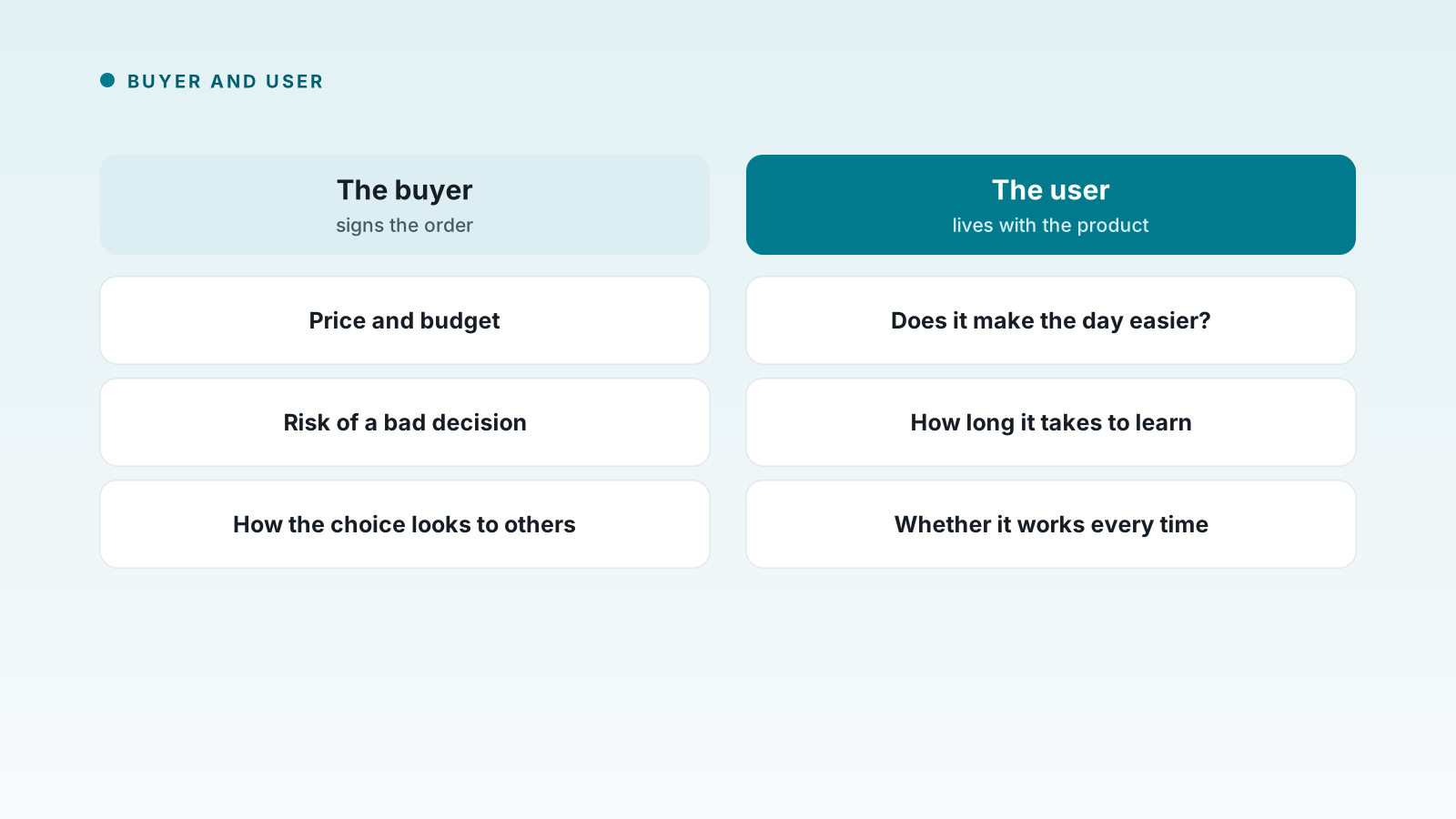
In many businesses the person who signs is not the person who uses the product. The buyer cares about price, risk and how the decision will look. The user cares about whether the thing makes their day easier.
Write a persona for each. Sales material that speaks only to the user stalls at the purchasing stage, and material that speaks only to the buyer wins contracts that nobody renews.
Map the journey
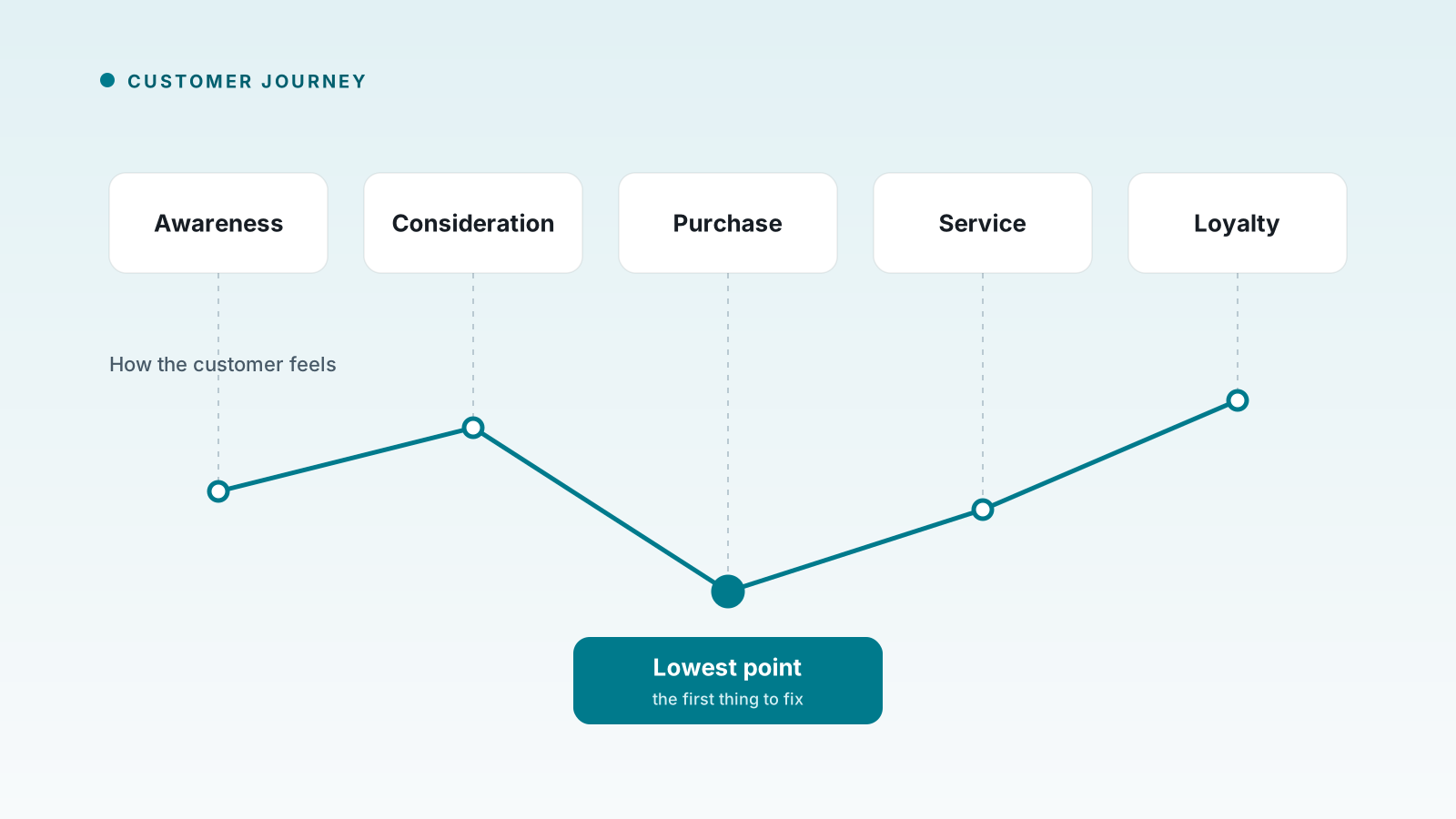
A journey map follows one persona from first hearing about you to becoming a loyal customer. For each stage, write what they do, what they think and how they feel.
The low points on that line are your opportunities. A confusing quote, a slow onboarding, a silent month after purchase: each one is a place where a competitor can take the customer, and where a fix is usually cheap.
- Awareness, consideration, purchase, service, loyalty
- One row each for actions, thoughts and feelings
- Circle the lowest point and fix that first
From map to action
A journey map is finished when it produces a short list of things to fix. For each low point, write down who in the company owns that moment and what the smallest improvement would be.
Often the fix is not expensive. A quote that arrives in one day instead of five. A phone call in the second week. A clear page that says what happens after the order is placed. Small changes at the worst moment are remembered more than large changes at a good one.
- One owner for each stage of the journey
- The smallest fix for the lowest point, first
- A date to check whether it worked
Check it against real customers
A persona or a map made in a conference room is a guess. Take it to five customers and ask them to correct it. They will, and they will usually enjoy doing it.
Update the documents after those conversations and put a date on them. Customers change, and a persona from three years ago describes someone who has moved on.
How many personas do you need?
Fewer than you think. Most companies can cover the large majority of their revenue with two or three. Each additional persona dilutes attention, and a wall of ten is a sign that nobody chose.
Rank them by how much of your profit they account for and build for the top one first. The exercise also tends to reveal a group of customers who cost more to serve than they bring in, which is worth knowing whatever you decide to do about it.