The ten slides a pitch needs
Ten slides is enough to explain a business. Guy Kawasaki's format is simple to describe and hard to do, which is why it works.
Why limit yourself
There are a gazillion ways to build a pitch deck. Most of them produce forty slides that the audience stops reading at slide six.
A fixed format forces choices. If you have ten slides, each one has to carry a single idea, and you have to decide which ideas matter. That discipline is most of the value.
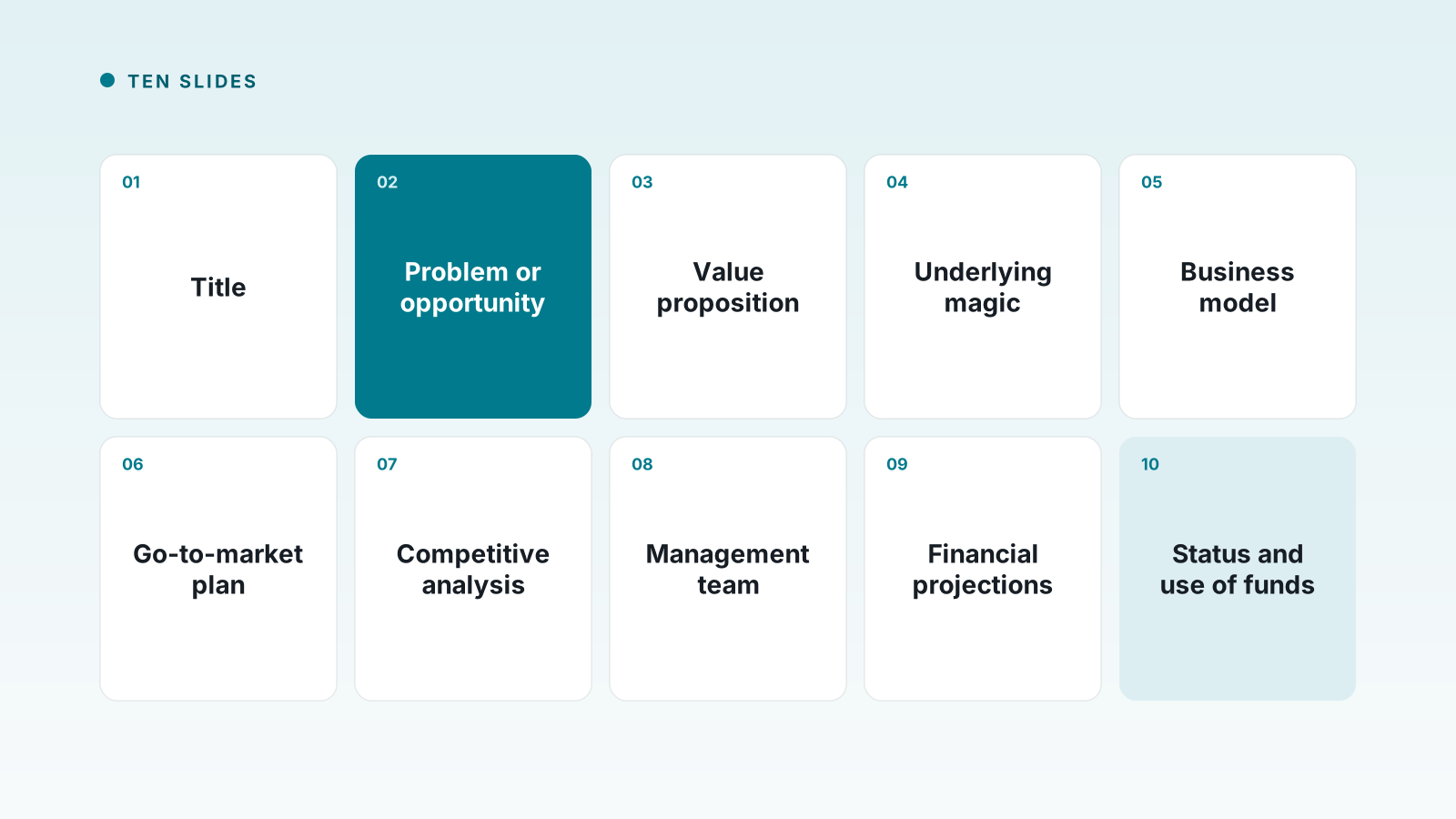
The ten slides
Kawasaki's list covers what any investor needs to know, in the order they tend to wonder about it: what the problem is, how you solve it, how you make money, how you will reach customers, who you compete with, who is on the team, and what the numbers look like.
The last slide says where you are today and what you would do with the money. It is the one that turns a presentation into a request.
- Title; problem or opportunity; value proposition
- Underlying magic; business model; go-to-market plan
- Competitive analysis; management team
- Financial projections and key metrics
- Current status, accomplishments, timeline and use of funds
Ten slides, twenty minutes, thirty-point type
Kawasaki pairs the ten slides with two more limits: present them in twenty minutes and use type no smaller than thirty points. The time limit leaves room for discussion, which is where decisions get made. The type size stops you from putting your speech on the screen.
A slide with thirty-point type holds a title and a few words. That forces you to know the material instead of reading it, and audiences can tell the difference within a minute.
- Ten slides
- Twenty minutes, even if you were given an hour
- Thirty-point type or larger
Simple, but not easy
The format is intuitive and straightforward. Filling it in is hard, because every slide exposes a question you may not have answered yet.
If the competitive slide is thin, you have not studied the market. If the business model slide needs three diagrams, the model is not clear to you either. Treat a weak slide as a to-do for the business, not for the designer.
When the audience is a lender or a buyer
The format was written for venture capital, and it adapts well. A lender cares most about whether the loan will be repaid, so the financial slide and the business model slide carry more weight, and the cash flow history matters more than the size of the market.
A buyer of the whole company wants to know what they would own and how durable it is. Spend more time on customers, on the management team that stays, and on what the business looks like without you in it.
In every case the rule holds: one idea per slide, in the order the audience needs it.
- Lender: cash flow, collateral, repayment
- Investor: growth, team, use of funds
- Buyer: durability, customers, management depth
Before you present
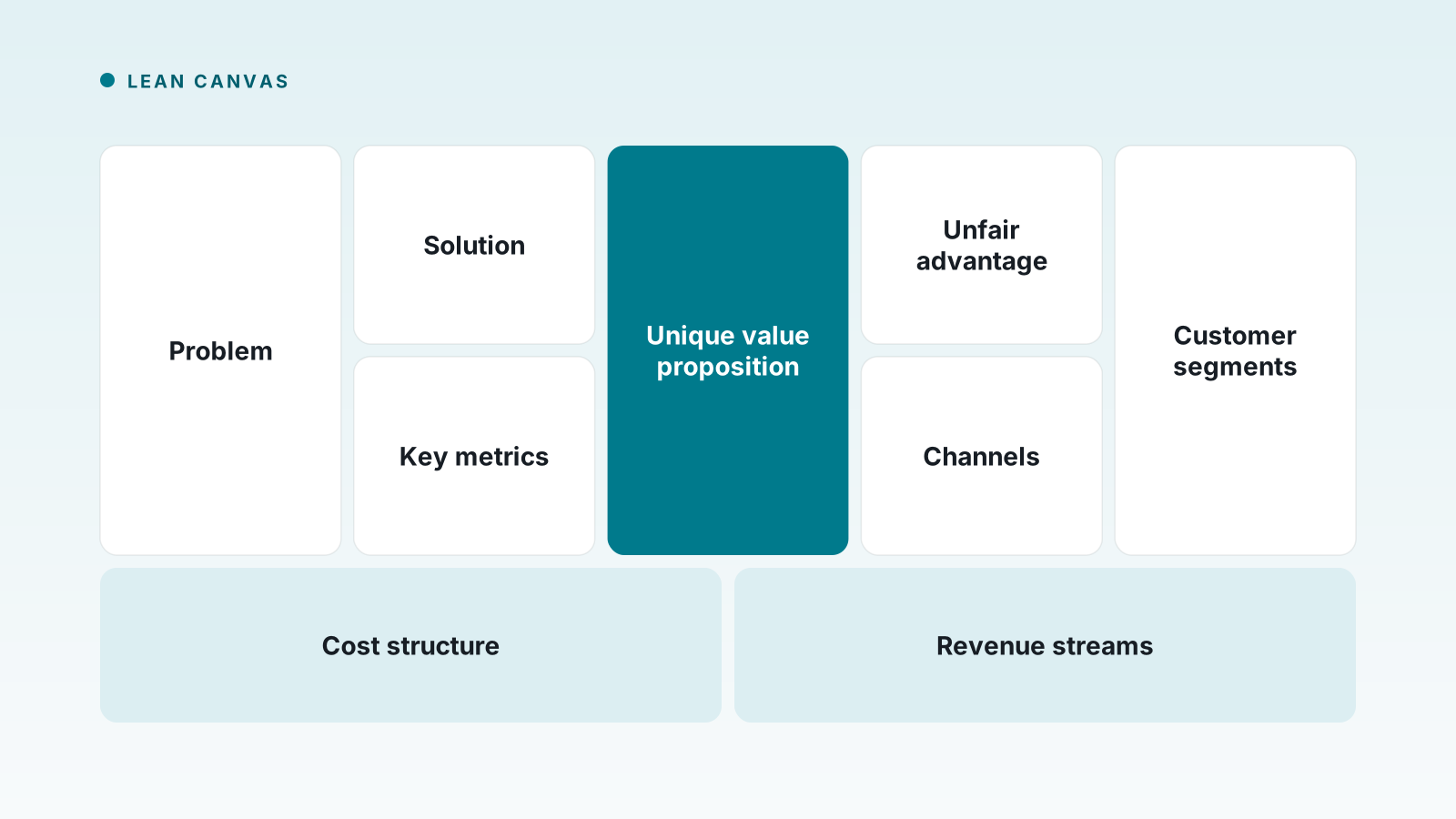
Write the canvas first. A deck is a presentation of a business model, and it is much easier to build once the one-page plan exists.
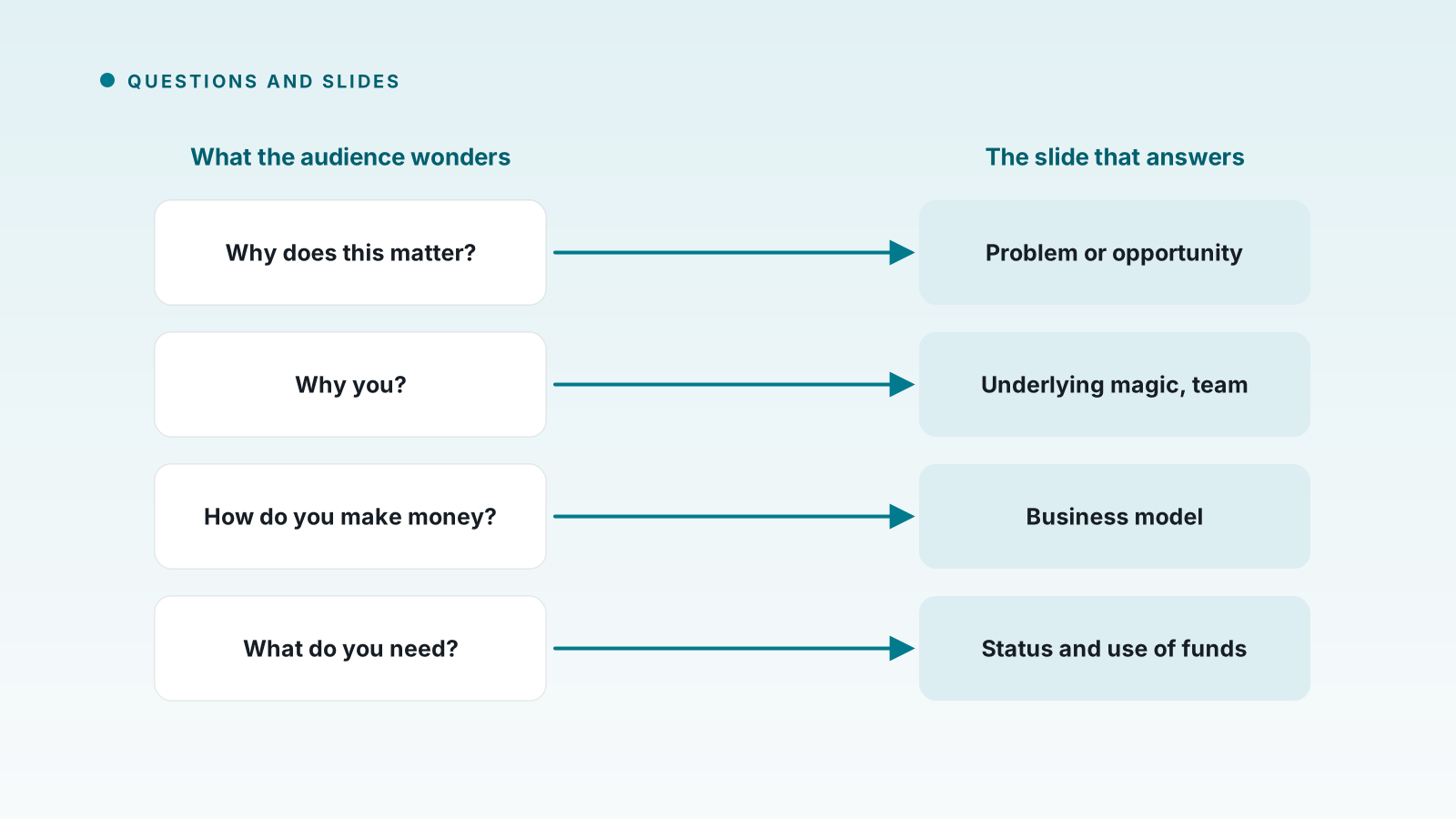
Then rehearse with someone who will interrupt. Investors rarely let you go slide by slide, so know which slide answers which question and be ready to jump.
- One idea per slide, stated in the title
- Numbers you can defend from memory
- A clear ask on the last slide
Keep the detail in an appendix
Ten slides does not mean ten slides of preparation. Behind the deck you should have the detail ready: customer lists, the financial model, the competitive research, résumés of the team.
Put it in an appendix and bring it out when asked. Answering a hard question by turning to a prepared page is one of the strongest signals a presenter can send. It shows the short deck was a choice.