Full or partial liquidity: an owner's options
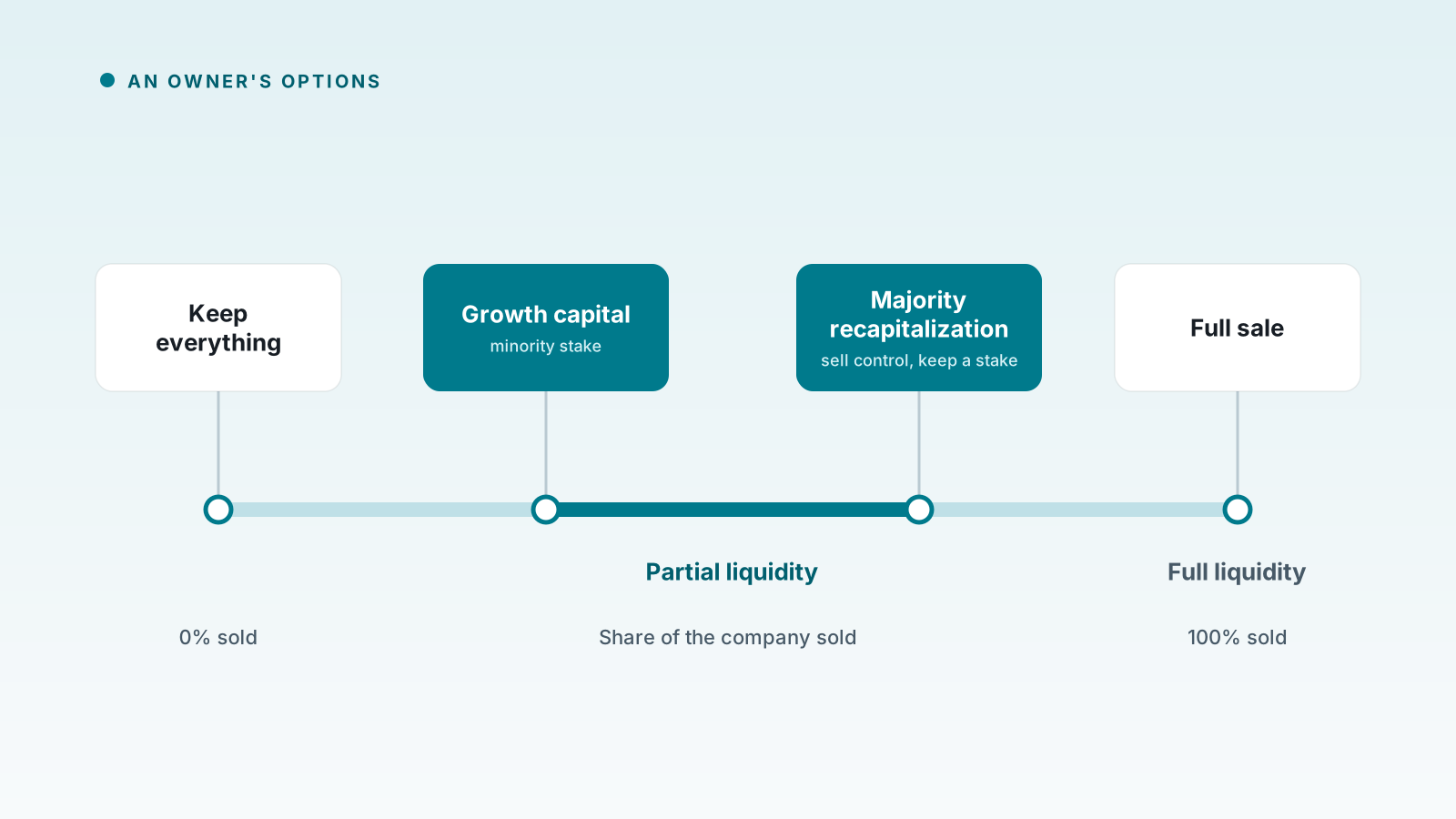
Selling is not all or nothing. Between keeping everything and selling everything sit several structures, each built for a different goal.
The question behind the question
Owners often arrive asking what the company is worth. The more useful first question is what they want the next ten years to look like.
Some want to keep running the business with more capital behind them. Some want to take money out and reduce how much of their net worth sits in one asset. Some want to hand over the keys. The right structure follows from that answer.
- Do you want to keep working in the business, and for how long?
- How much of your net worth is tied up in the company today?
- Who do you want to own and lead it after you?
Partial liquidity
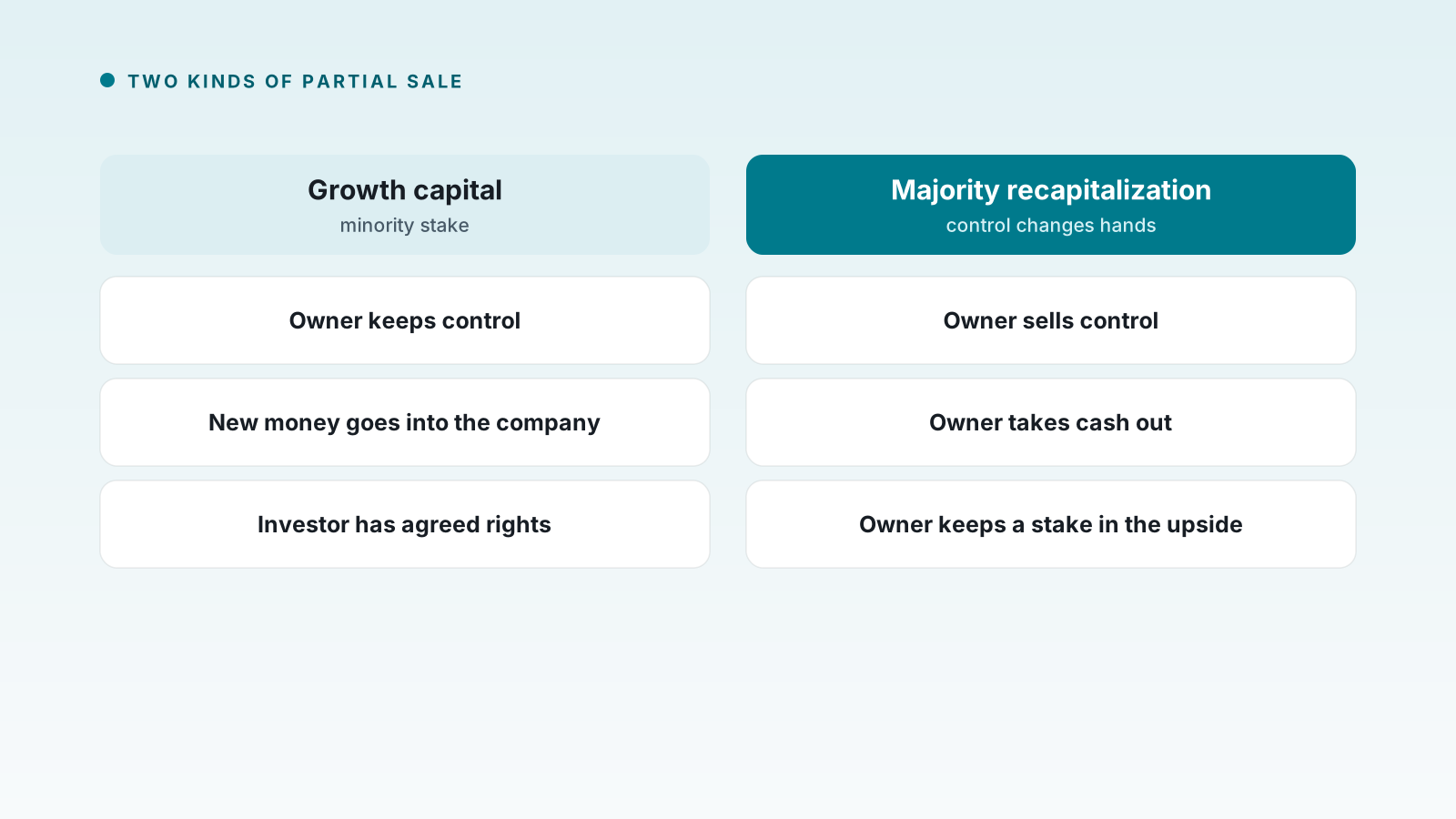
In a partial transaction the owner sells part of the company and keeps the rest. A minority investment for growth capital sits at one end. A majority recapitalization, where the owner sells control but keeps a meaningful stake, sits at the other.
The appeal is a second chance at value. The owner takes some money off the table now and still owns a share of whatever the company becomes with a capital partner involved.
- Growth capital: new money into the company, owner stays in control
- Partner buyout: capital to buy out a co-owner who wants to leave
- Majority recapitalization: owner sells control and keeps a stake
What changes after a partial sale
Taking on a capital partner changes how decisions are made, even when the owner keeps control. There is usually a board, a regular reporting rhythm, and a list of major decisions that need the investor's agreement, such as selling the company or taking on significant debt.
For many owners this is a benefit. A board gives them people to think with, and a partner who has seen other companies grow can shorten the path. For others it is the hardest part of the deal. Be honest with yourself about which kind of owner you are.
The documents will spell all of this out. Read the sections on governance as carefully as the section on price.
- Who sits on the board, and how are decisions made?
- Which decisions need the investor's consent?
- What reporting will be expected, and how often?
Full liquidity
A full sale transfers the whole company. It is the cleanest outcome for an owner who is ready to stop, and for a family without a next generation that wants to run the business.
Full does not have to mean abrupt. Many sales include a transition period in which the owner stays on to introduce customers, hand over relationships and help the new team settle in.
Structure is more than a percentage
Two offers at the same headline price can be very different. Part of the price may be paid at closing and part later. Some of it may depend on how the business performs after the sale. The owner may be asked to keep a portion of their proceeds invested in the company.
None of these features is good or bad on its own. Deferred payments can bridge a gap when buyer and seller see the future differently. Keeping a stake lets the owner share in what comes next. What matters is that you understand how much cash you receive, when, and what it depends on.
- How much is paid at closing, and how much later?
- Does any payment depend on future results?
- How much do I keep invested, and on what terms?
What an owner should ask a buyer
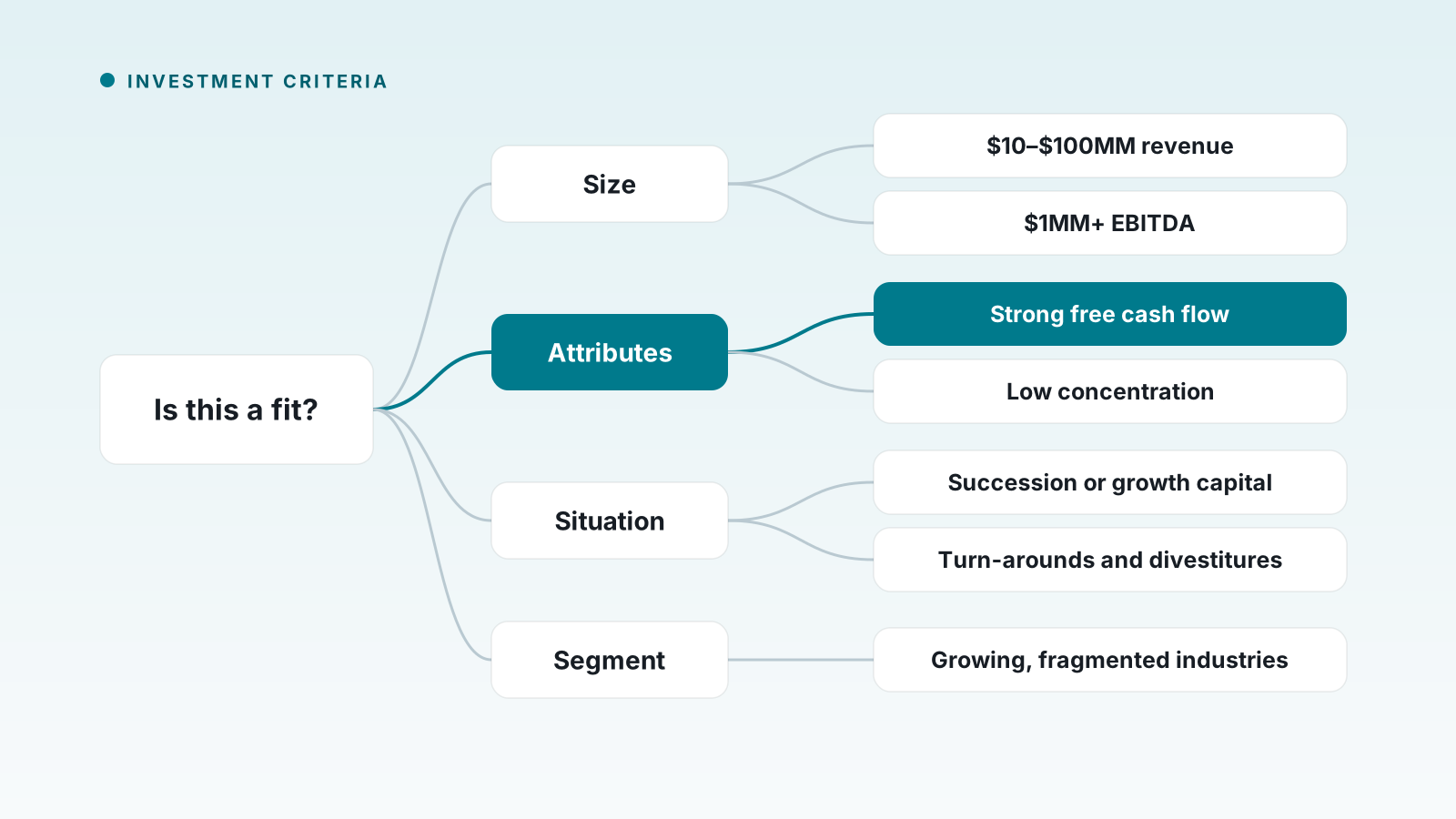
Price matters, and so does what happens after closing. We present ourselves as an exit option for owners who lack a defined succession plan, or who want to add management capabilities or diversify personal net worth, and we are flexible on structure because those goals differ.
Whoever you talk to, ask how they think about continuity. What happens to the name, the employees and the customers you spent decades on? A buyer who cares about your legacy will have specific answers.
- What structure do you propose, and why that one?
- Who will run the company day to day after closing?
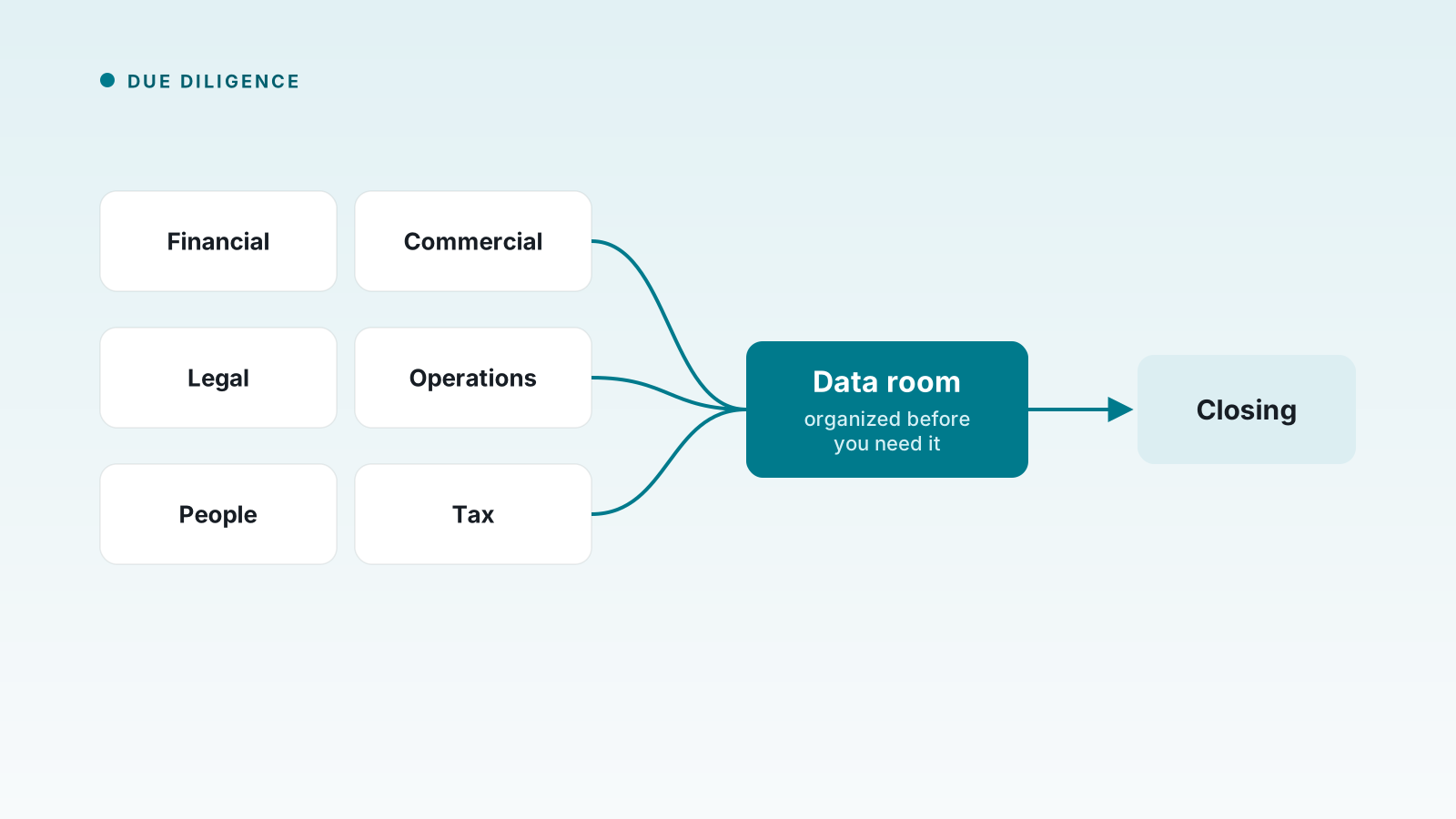
- How long does your due diligence usually take?
Get advice early
The choice between these structures has legal and tax consequences that depend on your situation and where you live. Talk to an attorney and a tax advisor who handle transactions before you negotiate terms, not after.
Good advisors pay for themselves by catching problems while they are still cheap to fix. This article is general information, not legal, tax or investment advice.