Getting ready for due diligence
Diligence is a buyer checking that the business is what you said it was. Preparation makes it shorter, calmer and less likely to reopen the price.
What diligence is
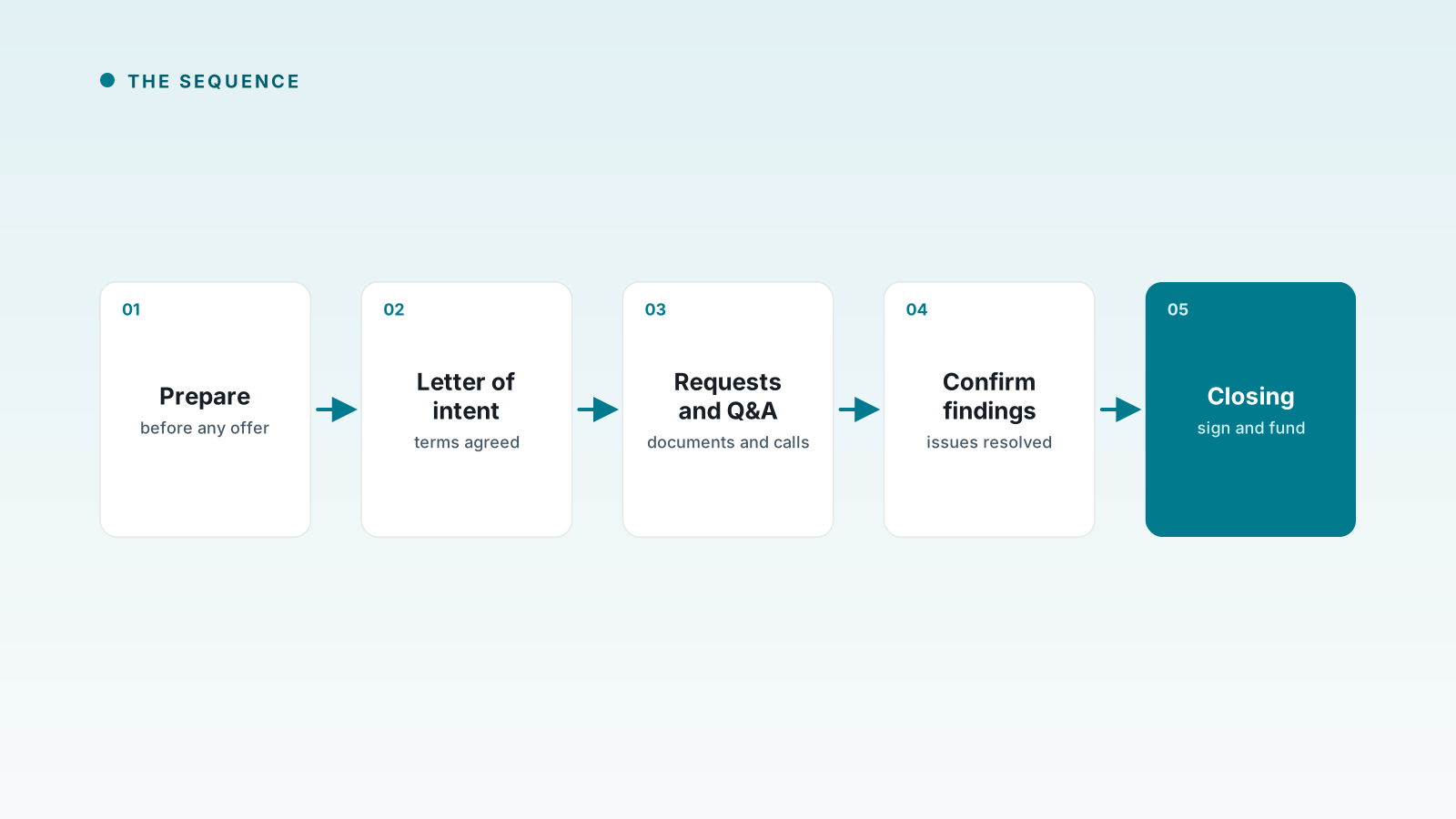
After a buyer and an owner agree on the outline of a deal, the buyer verifies it. They read contracts, test the financials, talk to managers and look for anything that would change their view of the business.
It can feel intrusive. It helps to remember that the buyer is about to commit real money on the strength of what you have told them, and that a careful buyer is usually a serious one.
The workstreams
Diligence is organized by topic, with different people on each. Knowing the list ahead of time lets you assign someone on your side to each one.
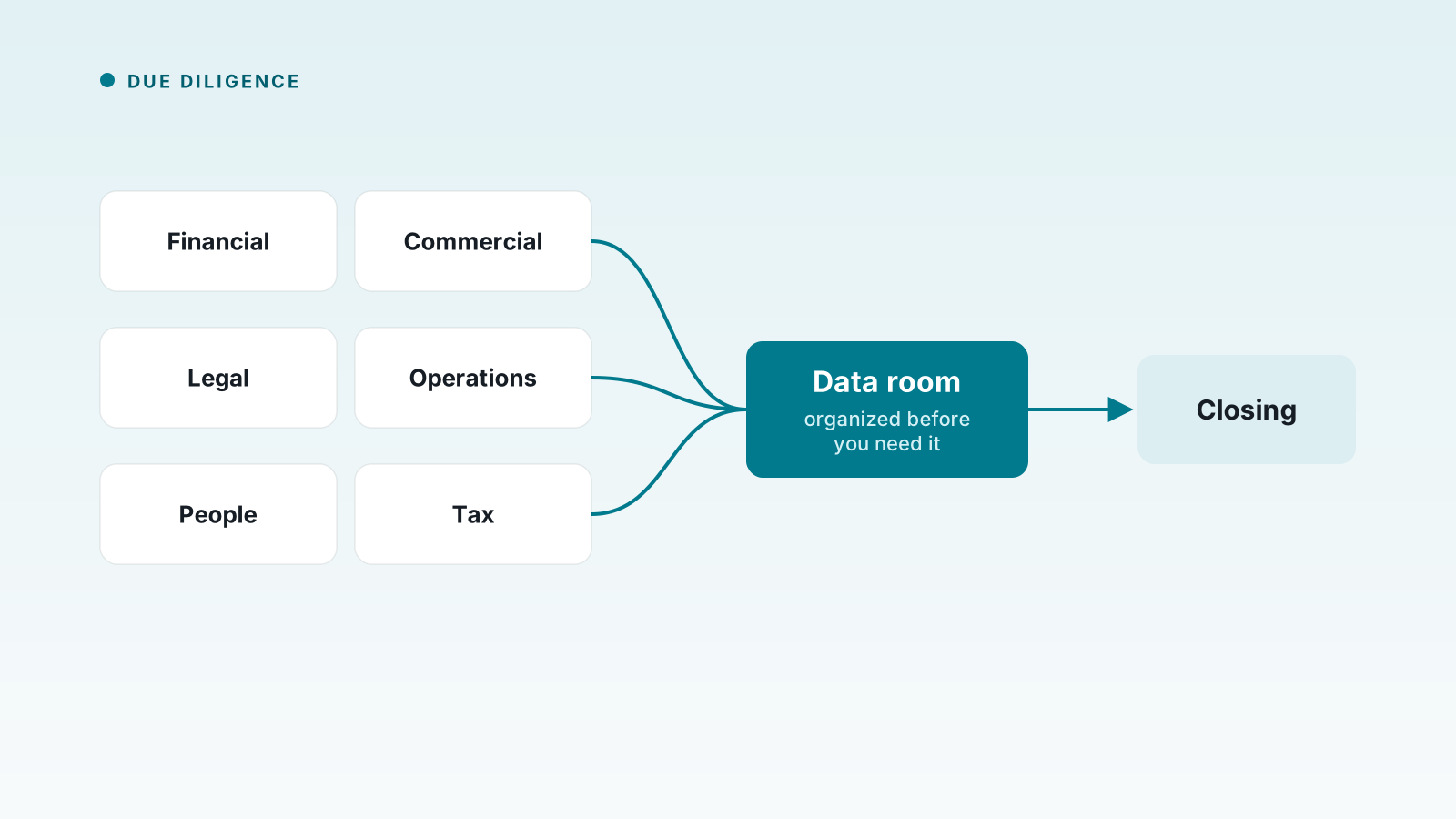
Most requests fall into six groups.
- Financial: statements, quality of earnings, working capital
- Commercial: customers, pricing, market and competitors
- Legal: contracts, entity records, disputes
- Operations: facilities, systems, suppliers
- People: organization, compensation, key employees
- Tax: filings and exposures
Who should be on your side of the table
Diligence is a second job on top of running the company. Decide early who will do it. Most owners need a transaction attorney, an accountant who knows the books, and one trusted person inside the company to gather documents.
Keep the internal circle small. Until a deal is certain, news of a possible sale can unsettle employees and customers. The people who do need to know, usually the head of finance and one or two senior managers, should be told directly and asked to keep it confidential.
- A transaction attorney, engaged before the letter of intent
- An accountant who can answer questions on the financials
- One internal coordinator for document requests
Build the data room before you need it
A data room is an organized set of folders holding the documents a buyer will ask for. Assembling it under deadline, while also running the company, is where most of the stress in a sale comes from.
Start early. Collect the documents by workstream, name them clearly and note what is missing. Gaps found by you in advance are a to-do list. Gaps found by the buyer during diligence are a negotiation.
- Three to five years of financial statements and tax returns
- Customer and supplier contracts
- Organization chart and employment agreements
- Licenses, permits, leases and insurance policies
Keep running the business
The most common way a deal goes wrong during diligence has nothing to do with the documents. The owner is distracted, a quarter comes in soft, and the buyer starts to wonder whether the business is weaker than it looked.
Protect the operation. Set fixed times in the week for diligence work and keep the rest for customers and staff. Results during the process are the freshest evidence a buyer has, and they carry a lot of weight.
- Fixed hours for diligence, the rest for the business
- One weekly call with the buyer in place of daily interruptions
- Watch monthly results more closely than usual
Tell the bad news first
Every business has something: a customer about to leave, a dispute, a weak quarter. Buyers find these things. What they remember is whether you told them or they discovered it.
Raise known issues early and explain what you have done about them. It protects the price, and it protects the relationship you may be working in for years afterward.
Common surprises
The issues that slow diligence are rarely dramatic. They are small things nobody tidied up: a key customer with no written contract, a lease in the owner's personal name, a contract that cannot be transferred without the other party's consent.
Others sit in the people files: employees without signed agreements, or contractors who work like employees. Then there are licenses that have lapsed and records of ownership that were never updated after a partner left.
All of these can be fixed, and fixing them before a buyer is involved costs a fraction of what it costs during a negotiation.
- Contracts: signed, current, and transferable?
- Property and leases: in the company's name?
- People: agreements signed and classifications correct?
- Ownership records: do they match reality?
What efficient diligence looks like
One of our stated values is being respectful, which for us means a commitment to efficient due diligence. In practice that is a clear request list, one point of contact on each side and questions that are asked once.
Ask any buyer how their process runs before you sign a letter of intent. This article is general information, not legal, tax or investment advice.