Product-market fit is iterative
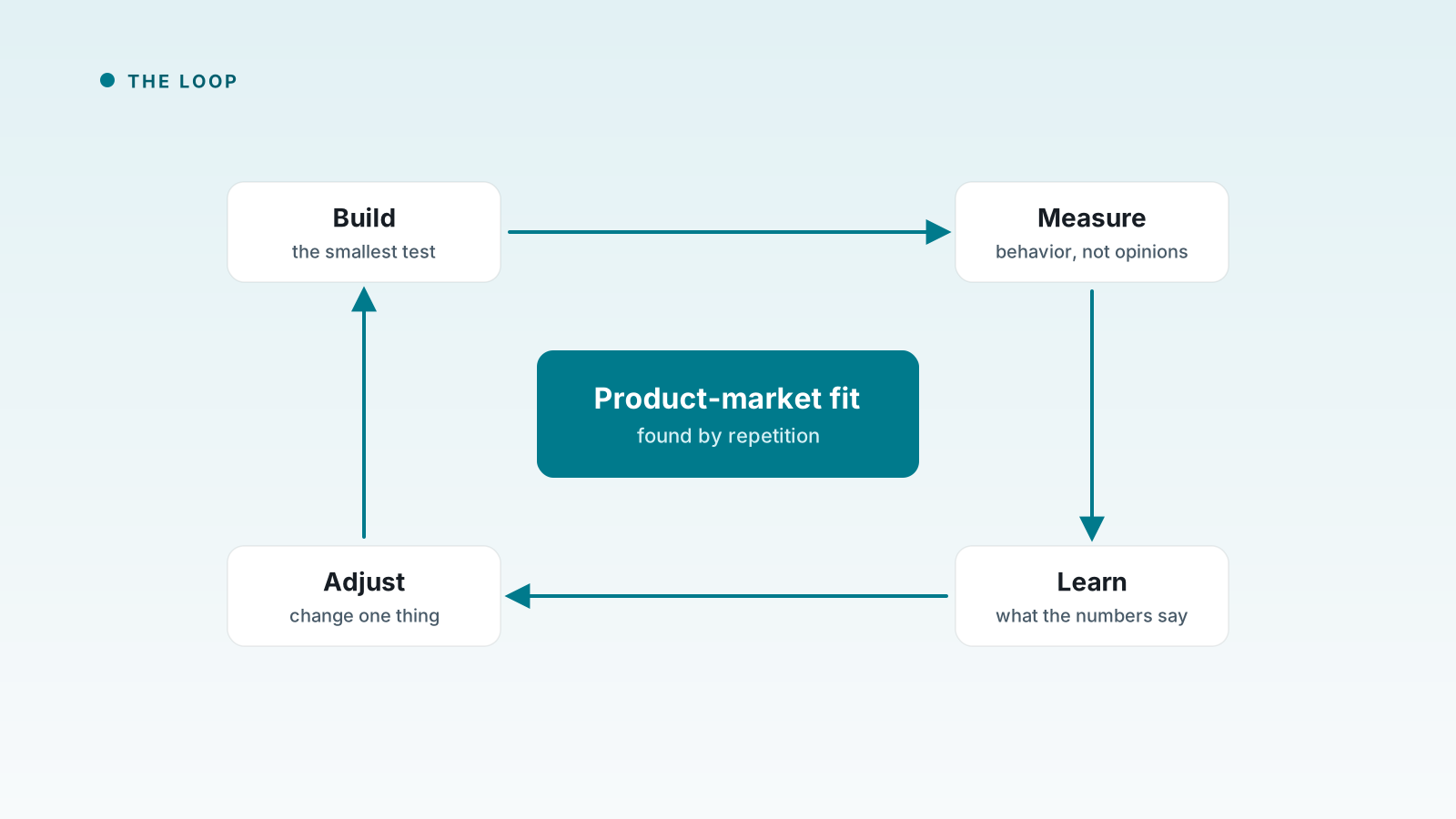
Fit is found by repetition: build a little, measure honestly, learn, adjust. The frameworks come from software, but the loop works anywhere.
What fit feels like
Before fit, every sale is pushed uphill. You explain, discount and follow up, and customers still drift away. After fit, the same effort produces more: customers come back, refer others and complain when something is unavailable.
The change is easy to describe and hard to fake, which is why investors ask about it early.
- Customers buy again without being chased
- New customers arrive through referrals
- People are upset when the product is unavailable
The loop
Nobody plans their way to fit. You build the smallest version of an idea, put it in front of customers, measure what they do rather than what they say, and adjust.
Then you do it again. Companies that find fit are usually the ones that ran the loop more times, with smaller and cheaper steps.
- Build: the smallest thing that tests the idea
- Measure: behavior, not opinions
- Learn: what the numbers say about your guess
- Adjust: change one thing and go again
Do not scale before fit
The most expensive mistake at this stage is spending on growth before the product holds customers. Advertising and sales hires bring in new buyers. If those buyers do not stay, the spending fills a bucket with a hole in it.
Before fit, keep the team small and the experiments cheap. The goal is learning per dollar. After fit, the same dollar buys growth, and that is the time to invest in sales and marketing.
The order matters to investors as well. Capital put into a business that has found fit speeds it up. Capital put in earlier mostly speeds up the spending.
- Before fit: small steps, low cost, many iterations
- After fit: invest in reaching more of the same customer
- Use repeat behavior, not first sales, to tell which stage you are in
Measure repeat behavior
First purchases tell you your marketing works. Second and third purchases tell you the product does. Whatever your business, find the number that captures customers coming back: renewals, reorders, repeat visits, referrals.
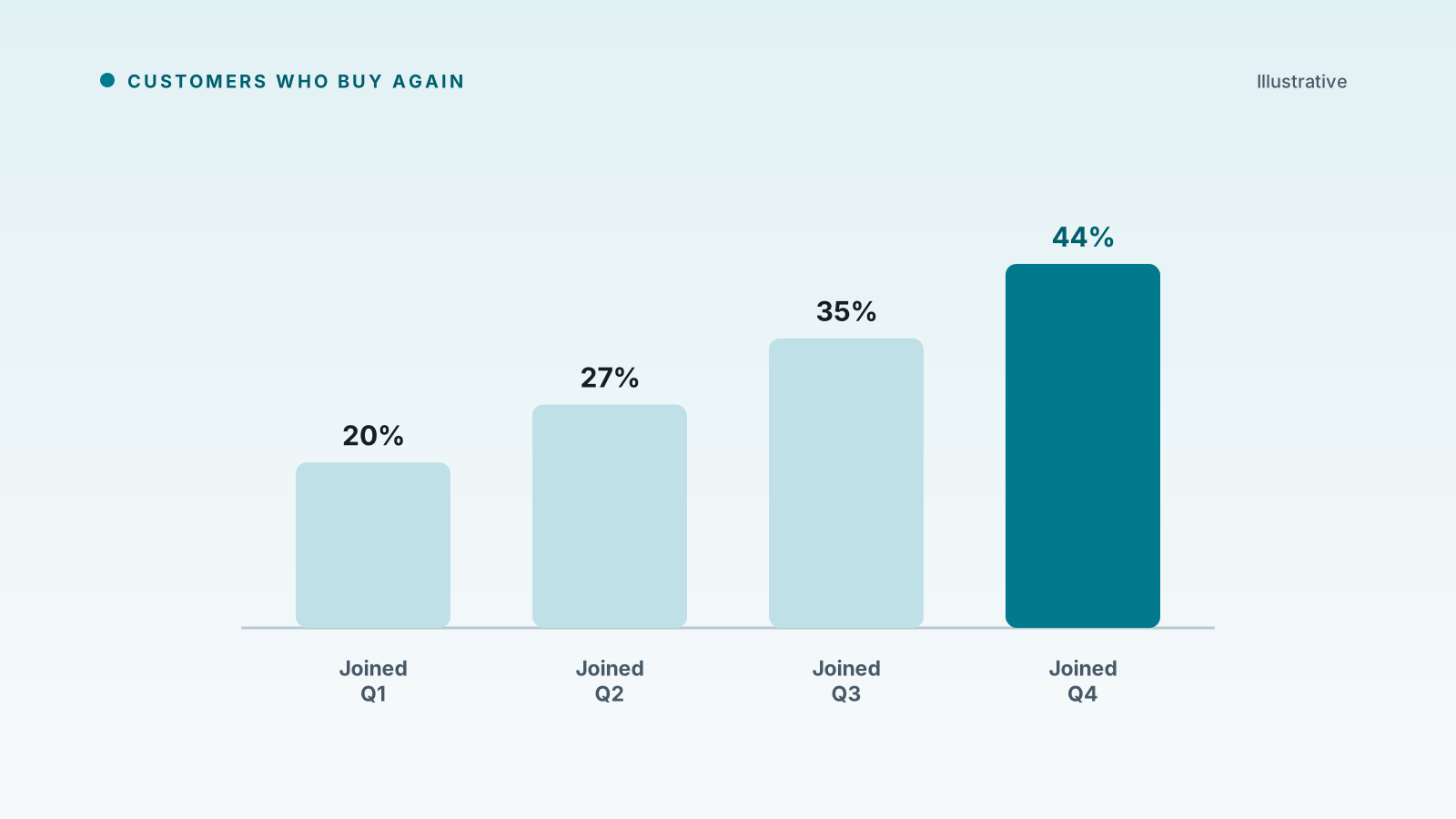
Watch that number by group. If customers who joined this quarter return more often than those who joined a year ago, you are getting closer.
Not only for software
Most writing on product-market fit comes from software companies, and the article linked below is about SaaS. The thinking transfers well to other businesses.
A contractor testing a new service line, a manufacturer trying a new customer segment and a clinic adding a procedure are all running the same loop. The questions about who the customer is carry over directly.
What to change when it is not working
When the numbers do not move, there are four things you can change: the customer, the problem, the product or the price. Change one at a time, or you will not know which change made the difference.
Start with the customer. Very often the product is fine and is being sold to the wrong group. Look at the few customers who do come back and ask what they have in common. That group may be your real market.
- Customer: who are the few who already love it?
- Problem: are you solving something they would pay to fix?
- Product: what is the smallest change that removes an objection?
- Price: is it too high for the value, or so low it signals low quality?
Ways to fool yourself
Friendly customers will tell you they like the product. Ask them to pay, renew or refer someone, and see what they do. Growth bought with discounts looks like demand until the discount ends. And an average can hide the fact that one large customer accounts for most of the repeat business.
Guard against all three by looking at behavior, at full price, customer by customer. It is less pleasant than a rising total and much more useful.