The Business Model Canvas: how a company makes money, on one sheet
Nine building blocks that show who you serve, what you give them, how you deliver it and whether the numbers work.
A model is not a plan
A business plan says what you intend to do. A business model says how the company works: who pays, for what, and why the money left over is more than the money spent.
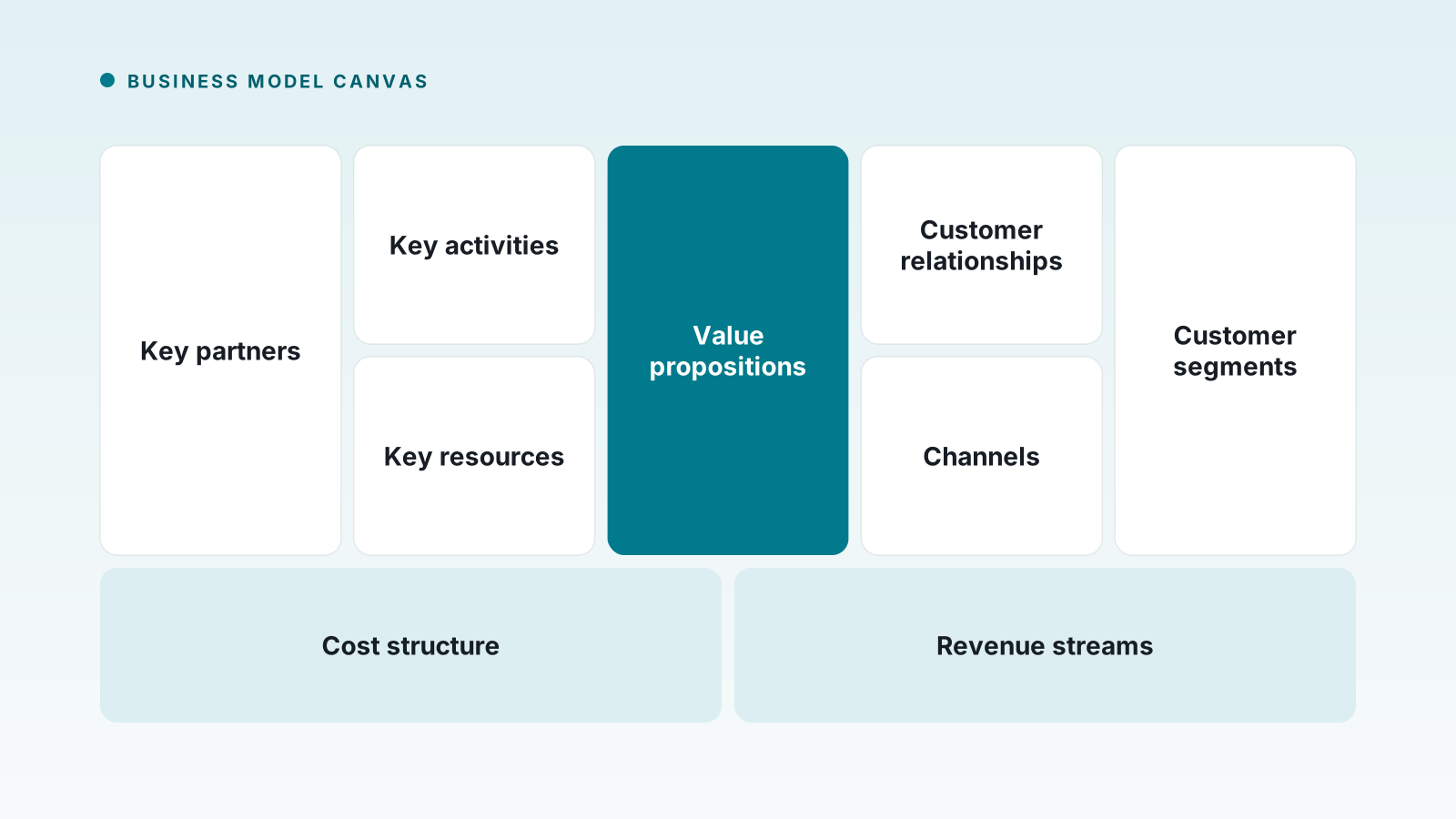
The Business Model Canvas puts that logic on a single sheet. It is most useful for a business that already operates, because it shows the moving parts next to each other and makes it obvious when two of them do not fit.
The right side: customers and revenue
The right half of the canvas is about the market. Which customer segments do you serve? What value do you offer each one? Through which channels do you reach them, and what kind of relationship do they expect?
Revenue streams sit underneath. They are the result of everything above: a segment that values what you offer will pay for it through a channel that works.
- Customer segments
- Value propositions
- Channels and customer relationships
- Revenue streams
The left side: how you deliver
The left half is about operations. What activities must you be excellent at? What resources do those activities need? Which partners and suppliers do you rely on?
Cost structure sits underneath, mirroring revenue. Reading the two bottom boxes together tells you whether the model makes money.
- Key activities and key resources
- Key partners
- Cost structure
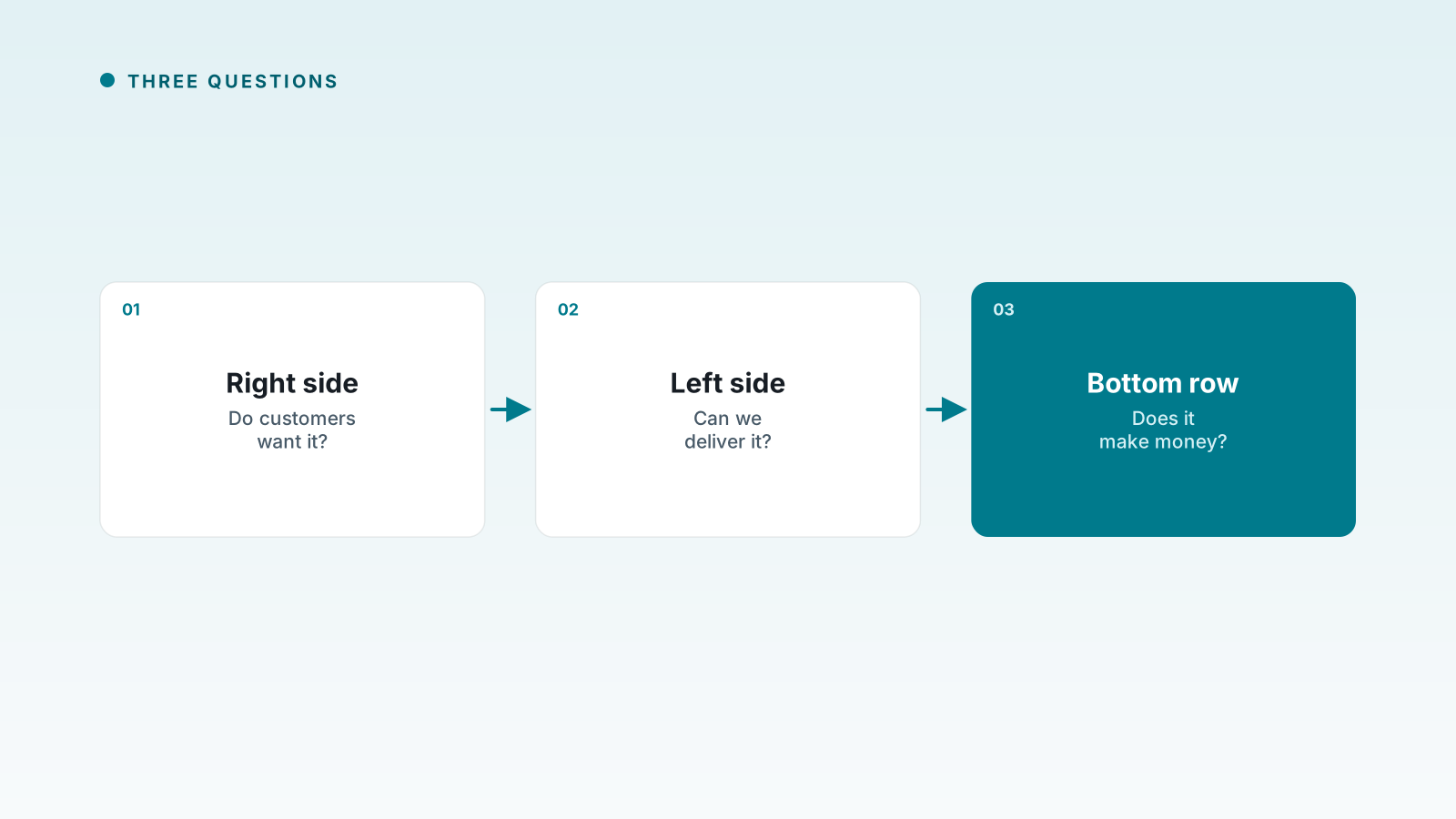
Three questions the canvas answers
Read as a whole, the canvas asks three things. The right side asks whether customers want what you offer. The left side asks whether you can deliver it reliably. The bottom row asks whether the revenue is larger than the cost.
A model that fails any one of them does not work, however strong the other two are. A product people love that cannot be delivered at a profit is a hobby. An efficient operation selling something nobody wants is a warehouse.
When a business is struggling, this is a quick way to find where. Ask the three questions in order and stop at the first one you cannot answer with evidence.
Business Model Canvas or Lean Canvas?
The two look alike because the Lean Canvas was adapted from the Business Model Canvas. They are built for different moments.
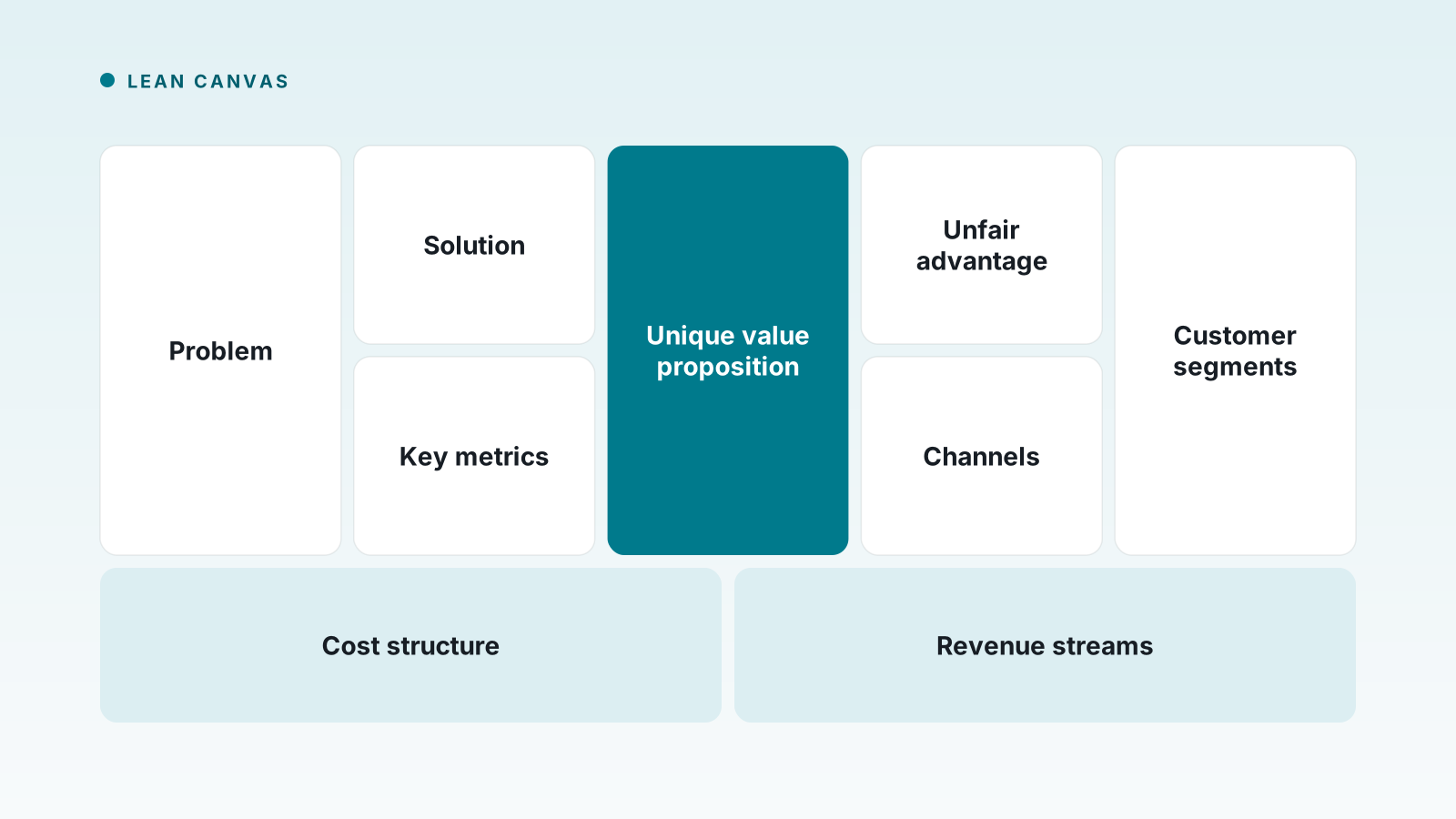
The Lean Canvas is for an idea that is still being tested. It replaces partners, activities and resources with problem, solution and key metrics, because a new venture's biggest risk is building something nobody needs. The Business Model Canvas suits a company that is already operating and wants to see, or change, how its parts fit together.
- Testing a new idea or product line: start with the Lean Canvas
- Describing or redesigning an operating business: use the Business Model Canvas
- Either one beats a blank page
Use it to compare, not to decorate
The canvas earns its place when you draw more than one. Sketch the business as it is today. Then sketch it with a new segment, a different channel or a different pricing model, and compare the sheets.
It is also a quick way to understand a competitor or a company you are thinking of buying. If you cannot fill in their canvas, you have found your diligence questions.
- One canvas for today, one for each option you are weighing
- Mark the boxes that change between versions
- Start with the worked examples in the guide below
Common mistakes
The first is mixing several customer segments in one sheet without saying which value proposition belongs to which. If you serve two distinct groups, use two colors or two canvases.
The second is filling boxes with categories instead of specifics. “Marketing” is not a channel. “Referrals from accountants” is. The more concrete the entry, the easier it is to see whether it is true.
The third is treating the finished sheet as the goal. The canvas is useful for the conversation it starts, especially when the people in the room turn out to disagree about what goes in a box.
- One value proposition per segment, clearly linked
- Specific entries a stranger could check
- Fill it in as a team and note where you disagreed